Evaluating the Oil Painted Peony Floral Seamless Pattern for Creative Projects
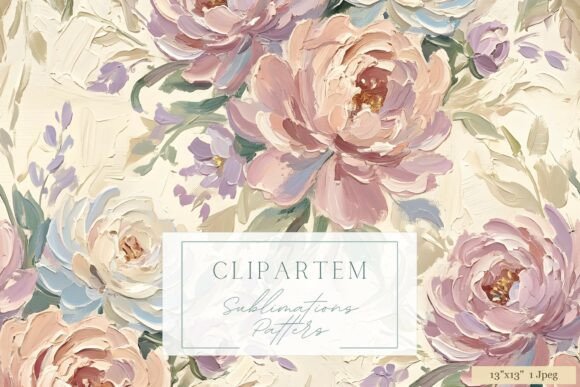
The Oil Painted Peony Floral Seamless Pattern represents a specific category of digital asset designed for creators seeking a blend of classical artistry and modern utility. This surface pattern features full-bloom peonies and roses rendered in a rich oil painting style, characterized by visible impasto brushstrokes that mimic the texture of traditional canvas work. The color palette is composed of soft blush pink, dusty lavender, powder blue, and sage green florals arranged across a warm creamy ivory background. For designers, manufacturers, and hobbyists, understanding the nuances of this specific aesthetic is crucial when selecting assets for fabric printing, sublimation, stationery, or home décor.
Understanding the Aesthetic and Technical Composition
At its core, this pattern is defined by its simulation of traditional media. Unlike flat vector illustrations or crisp digital photography, the Oil Painted Peony Floral Seamless Pattern relies on the visual depth created by simulated paint thickness. The "impasto" effect suggests that the flowers were painted with heavy strokes, giving the design a tactile quality even when viewed on a screen. This is achieved through careful shading and highlight placement within the high-resolution JPEG file, which is typically provided at 300 DPI to ensure print clarity.
The seamless nature of the file is a critical technical feature. It means the image can be tiled horizontally and vertically without visible breaks or seams, allowing it to cover surfaces of any size continuously. The warm creamy ivory background serves as a neutral yet inviting base, ensuring that the pastel florals remain the focal point without creating excessive contrast that might clash with other design elements. This specific combination of romantic florals and painterly texture creates an elegant aesthetic that bridges the gap between vintage charm and contemporary softness.
Primary Applications and Ideal Use Cases
Creators often evaluate this pattern based on its versatility across different mediums. The Oil Painted Peony Floral Seamless Pattern is particularly well-suited for applications where a soft, organic feel is desired.
- Fabric Printing: The painterly texture translates exceptionally well to textiles. The slight variations in color density mimic the way dye interacts with natural fibers, making it an excellent choice for quilting cotton, apparel, or upholstery fabrics where a hand-painted look is preferred over rigid geometric prints.
- Sublimation and POD Products: For print-on-demand businesses, this pattern is effective for tumbler wraps and tote bags. The 300 DPI resolution ensures that the fine details of the brushstrokes do not become pixelated when wrapped around curved surfaces or printed on larger items.
- Wedding Stationery and Paper Goods: The romantic palette of blush, lavender, and sage aligns perfectly with current wedding trends. It serves as a strong foundation for invitations, save-the-dates, and gift wrapping, offering a sophisticated alternative to stark white or overly bright floral designs.
- Digital Scrapbooking: Digital crafters value the layering potential of such patterns. The ivory background allows for easy integration with other elements, while the floral motifs provide immediate visual interest without requiring additional embellishment.
Benefits and Design Advantages
One of the primary benefits of choosing this specific pattern is its timeless appeal. Floral motifs are perennial favorites, but the oil painting style elevates them beyond generic clip art. The visible brushstrokes add a layer of perceived value and artistry, suggesting a custom or boutique quality to the final product. This can be particularly advantageous for small business owners looking to differentiate their merchandise in a crowded marketplace.
Furthermore, the color scheme offers significant flexibility. The inclusion of sage green and powder blue alongside the dominant pinks and lavenders provides a balanced cool-to-warm ratio. This makes the pattern adaptable for various seasons; it is soft enough for spring collections yet possesses enough depth in the greens and blues to remain relevant in autumn palettes. The warm ivory background is also less harsh than pure white, reducing eye strain in large-scale applications like wallpaper and creating a cozier atmosphere in home décor contexts.
Considerations and Potential Tradeoffs
While the Oil Painted Peony Floral Seamless Pattern offers many advantages, it is not universally applicable. Designers must consider the limitations inherent in raster-based, highly detailed imagery. Because the design relies on complex textures and subtle color gradients, it may not scale down effectively for very small applications, such as favicons or tiny icons, where the impasto details could become muddy or indistinguishable.
Additionally, the specific romantic and lush aesthetic may not align with brands or projects aiming for a minimalist, modern, or industrial look. The density of the floral arrangement and the softness of the colors create a distinct mood that might overpower a design intended to be sleek or understated. Users seeking high-contrast, bold graphics will likely find this pattern too subdued.
Another consideration is the file format. As a high-resolution JPEG, the image is ready for immediate use but lacks the editability of vector files (SVG or AI). While the 300 DPI resolution is standard for professional printing, users who need to drastically alter the shape of individual flowers or separate color layers for screen printing processes may find the flattened JPEG format restrictive compared to layered source files.
Decision-Making Insights for Selection
When determining whether this pattern aligns with your project goals, evaluate the intended emotional response of your audience. If the objective is to evoke feelings of nostalgia, romance, elegance, or comfort, the Oil Painted Peony Floral Seamless Pattern is a strong candidate. It is particularly effective for demographics that appreciate traditional art forms and soft, feminine aesthetics.
However, if the project requires strict color matching (PMS colors) or the ability to resize the graphic infinitely without loss of quality, alternative solutions such as vector-based floral patterns may be more appropriate. Similarly, for projects targeting a youthful, edgy, or ultra-modern market, a more abstract or geometric pattern might yield better engagement.
Ultimately, the decision rests on the harmony between the medium and the message. For fabric designers, stationers, and home décor creators who prioritize texture and atmospheric depth, this seamless pattern offers a robust solution. Its ability to tile seamlessly ensures consistency across large runs, while the oil-paint simulation provides a unique visual hook that static digital illustrations often lack. By weighing the need for artistic texture against the requirements for scalability and editing flexibility, creators can make an informed choice about integrating this lush, romantic design into their workflow.